
Hall of Shame Entry #2
Introduction
This entry profiles Dan Karasic, MD, Professor Emeritus of Psychiatry at the University of California San Francisco, co-author of the WPATH Standards of Care Version 7, and lead author of the Mental Health chapter of the WPATH Standards of Care Version 8 — the documents that have governed pediatric medical transition in the United States for more than a decade.
Karasic is not a peripheral figure. He is the psychiatrist who defined what the mental health profession was supposed to require before a child or adolescent was referred for hormones or surgery. He wrote the rules. He trained the trainers. He testified in court. He is still delivering CME sessions to practicing psychiatrists in 2026.
What those rules produced — a framework so permissive that a nurse practitioner’s hesitation about prescribing hormones to a patient with PTSD, major depressive disorder, dissociation, and schizoid traits prompted Karasic to respond, “I’m missing why you are perplexed” — is not an accident. It is the system he designed.
This entry documents what he built, what it has done, and what he continues to say in rooms he believes are not being recorded.
I. Background and Credentials
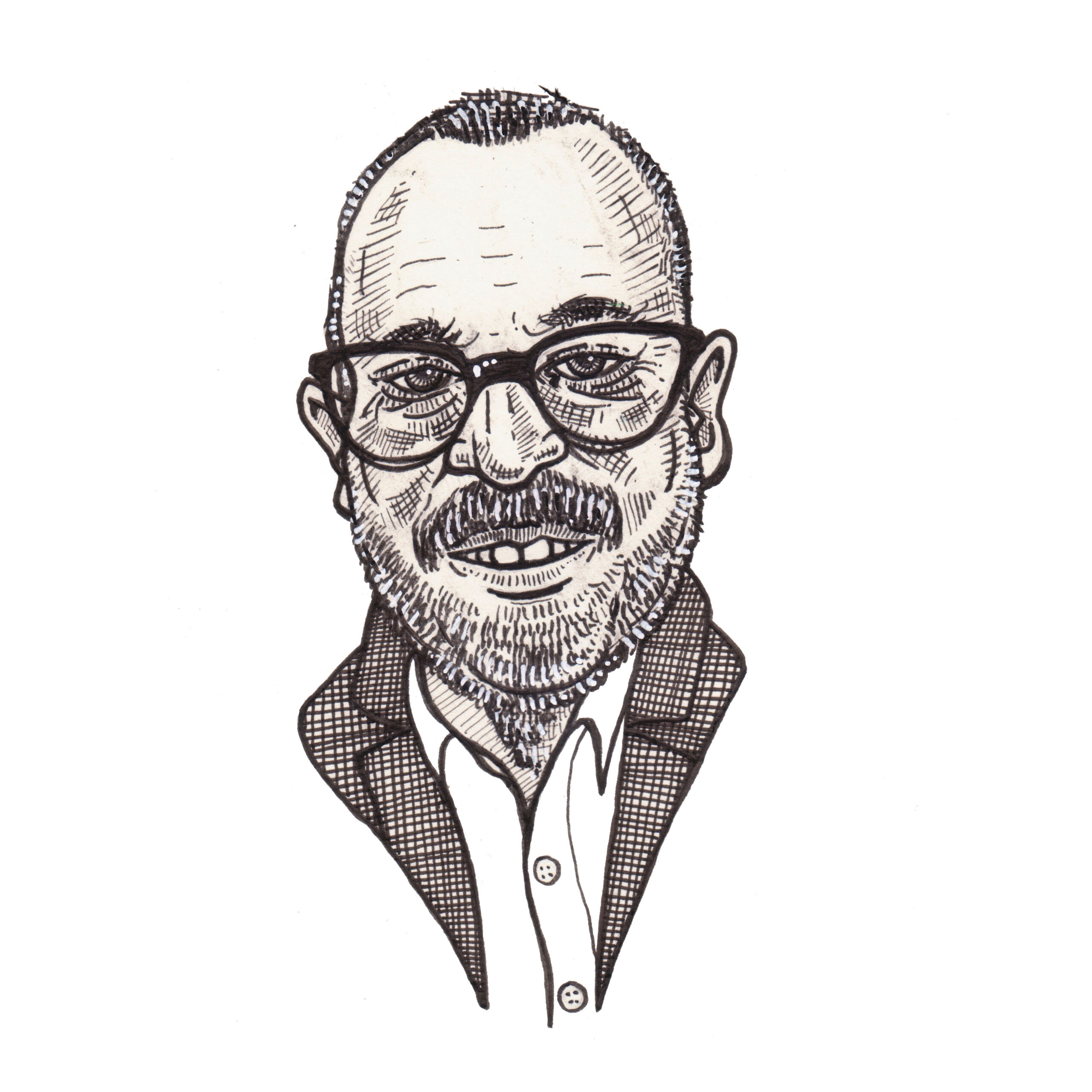
Dan Halaban Karasic was born in 1960. He graduated summa cum laude from Occidental College with a degree in biology in 1982, earned his MD from Yale University School of Medicine, and completed his psychiatry residency at the UCLA Neuropsychiatric Institute (1987–1991), followed by postdoctoral work in sociology at UCLA.
He joined UCSF in 1991 at the height of the AIDS crisis — a gay man who, by his own account, was drawn to San Francisco to care for patients with HIV and psychiatric disorders. He worked for decades at the UCSF Alliance Health Project and at Ward 86 at Zuckerberg San Francisco General Hospital, one of the nation’s first HIV clinics. His early publishing record is in HIV psychiatry and depression treatment — legitimate, credentialed work.
His pivot to gender medicine began in earnest in the early 2000s. In 2003 he became psychiatrist for both the Transgender Life Care Program and the Dimensions Clinic for transgender youth at Castro Mission Health Center — a role he held for seventeen years, giving him direct clinical experience with minors seeking medical transition. He has served on the San Francisco Human Rights Commission (1998–2002) and as President of the Association of Gay and Lesbian Psychiatrists (2005–2007).
He is currently a Professor Emeritus — meaning he has retired from active faculty status — and operates a private telepsychiatry practice in California. He has no institutional employer. He faces no tenure review, no hospital credentialing body, and no administrative supervisor. His only remaining accountability is reputational.
II. WPATH and the Architecture of SOC8
Karasic’s involvement with the World Professional Association for Transgender Health (WPATH) spans more than fifteen years. He served on WPATH’s Board of Directors, co-authored the Standards of Care Version 7 (published 2012), and served as lead author of the Mental Health chapter of SOC8 (published 2022) — the document that currently governs clinical decision-making regarding pediatric medical transition across the United States and much of the world.
He co-chaired the inaugural United States Professional Association for Transgender Health (USPATH) conference in 2017, at which discussions of lowering the minimum age for vaginoplasty in minors were on the formal agenda. He has published research surveying WPATH-affiliated surgeons about their willingness to perform vaginoplasty on patients under 18, finding that surgeons reported performing the procedure on patients as young as 15. The paper’s title: “Age Is Just a Number.”
His role at WPATH was not advisory. He was an architect. When SOC8 removed minimum age requirements for puberty blockers, cross-sex hormones, and surgeries, Karasic was the lead author of the chapter most directly responsible for determining what — if any — mental health evaluation would stand between a patient and those interventions.
III. The Mental Health Chapter: What He Built and What It Does
The mental health chapter of SOC8, under Karasic’s lead authorship, moved the field decisively away from any safeguarding function for psychiatry and psychology. The framework he authored is built on the depathologization of gender identity — meaning that the clinical question is no longer whether transition is appropriate for a given patient, but only whether the patient consents to it.
The document states this plainly. On psychiatric comorbidities, the chapter reads:
“There is no evidence to suggest a benefit of withholding gender-affirming medical and surgical treatments from TGD people who have gender incongruence simply on the basis that they have a mental health or neuro-developmental condition.”
On the likelihood of other explanations for a patient’s distress, the chapter instructs clinicians:
“It is rare for gender-questioning clients to have a condition that may be mistaken for gender incongruence or to have another reason for seeking treatment aside from the alleviation of gender incongruence.”
This sentence is worth pausing on. It instructs clinicians to presume — before conducting any comprehensive assessment — that gender incongruence is the cause of the patient’s distress, and that other explanations are rare. This is a significant departure from standard medical practice, which requires a comprehensive assessment before assuming a specific diagnosis for a complex set of signs and symptoms.
The circular logic that results is explicit in the document’s own framing: a patient seeking transition is likely to have significant mental health problems, but those problems should be assumed to result from untreated gender dysphoria, and therefore should not be a reason to withhold treatment. The chapter’s own reasoning forecloses the clinical inquiry it nominally requires.
On the question of minimum age — SOC7 had set 16 as the minimum age for hormones — Karasic’s SOC8 removed it entirely. The document gives no specific age limits for any treatment, directing clinicians to decide individually for each patient.
Under the framework he authored:
- A psychiatric diagnosis is no longer a prerequisite to access treatment.
- Psychiatric comorbidities — including PTSD, depression, autism, dissociation, and psychosis — are explicitly not grounds for delaying or declining referral.
- The clinician’s role is not to resolve those conditions first but to manage them alongside transition.
- No minimum age applies to hormonal treatment.
This is not a neutral clinical framework. It is an ideological one — and Karasic has been its most prominent psychiatric defender.
IV. Dismissing Psychiatric Comorbidities: The WPATH Files
In 2024, internal WPATH communications were obtained and published by Environmental Progress. Among the most significant documents were records of discussions in which WPATH clinicians sought guidance on difficult cases. What those records revealed was Karasic applying his own published framework in real time — and in his own words, not the measured language of a formal document.
In one exchange, a nurse practitioner described struggling with whether to prescribe hormones to a patient who had PTSD, major depressive disorder, observed dissociations, and schizoid traits. She was perplexed — uncertain whether those conditions should be stabilized before initiating hormonal treatment.
Dan Karasic, lead author of the SOC8 Mental Health chapter, responded:
“I’m missing why you are perplexed… The mere presence of psychiatric illness should not block a person’s ability to start hormones.”
The correspondence between this private statement and his published standard is exact. SOC8 says psychiatric illness is not a reason to withhold treatment. In the internal forum, a clinician raises precisely that concern — and Karasic tells her she has no reason to be concerned at all.
The leaked communications also revealed that Karasic and his colleagues do not view dissociative identity disorder or homelessness as contraindications to hormone therapy or surgical removal of the testes in patients who identify as gender diverse. They presented neither as an edge case. Their positions were unequivocal, stated without perceptible reservation.
This is the mental health chapter author of the governing global standards of care. This is what he built, and this is how he applied it.
V. The Autism Controversy: May 2023
On May 5, 2023, Karasic delivered a talk titled “Managing Patients with Co-Occurring Mental Health Diagnoses” at the San Francisco Trans Health Summit. The audience included Dr. Diane Ehrensaft, director of mental health at the UCSF Benioff Children’s Hospital gender clinic.
Audio of the session was obtained and published by The Post Millennial on May 10, 2023. In the recording, Karasic asserted that severe autism should not prevent approval for medical transition. He dismissed the clinical concern that gender fixation in autistic patients may reflect the intense, narrow focus characteristic of autism spectrum disorder rather than a stable cross-sex identity.
In the most widely circulated exchange from the recording, Ehrensaft described a non-verbal, severely autistic 8-year-old patient with precocious puberty who had already been placed on puberty blockers. She proposed that clinicians “may have to depend on drawings” to assess gender identity in patients who cannot answer standard assessment questions verbally, characterizing standard assessment protocols as “really discriminatory” toward non-verbal patients. Karasic affirmed the approach.
The story spread rapidly. Three years later — at the 2026 APA Annual Meeting — Karasic opened his CME session not with clinical evidence but by describing this episode as a “fake tweet” and relitigating the controversy at length. His characterization of the recording as misrepresentation is contradicted by the audio itself, which remains publicly available.
That he chose to devote a significant portion of a credentialing session for practicing psychiatrists to his personal grievance about a three-year-old social media story is itself instructive.
VI. The Ideology Beneath the Framework: Patient Autonomy as Abandonment
To understand why Dan Karasic responded to a nurse practitioner’s clinical concern with “I’m missing why you are perplexed,” it is necessary to understand the ideological framework that produced that response — because it did not emerge from negligence or ignorance. It emerged from a coherent, if deeply flawed, philosophy that Karasic has applied consistently across his career.
Karasic came of age as a psychiatrist during two overlapping historical movements: deinstitutionalization and the depathologization of homosexuality. Both were legitimate responses to genuine abuses. Involuntary psychiatric commitment had been used as a tool of social control. Gay men and lesbians had been classified as disordered by the very profession he entered. For a gay man who watched his community decimated by AIDS while institutions failed them, the anti-paternalism framework carried real moral weight. The instinct to say “the patient knows best” was forged in the experience of watching patients harmed by institutions that thought they knew better.
But there is a critical distinction — one that Karasic’s framework collapses entirely — between rejecting the pathologization of identity and rejecting the protective function of psychiatric assessment for people with serious mental illness. These are not the same thing. One is a civil rights principle. The other is the abandonment of clinical responsibility dressed in civil rights language.
The historical warning about this distinction is not abstract. Deinstitutionalization in the United States in the 1970s and 1980s was also framed as liberation — replacing institutional coercion with community freedom and individual autonomy. In practice, it dismantled the social safety net for people with serious mental illness without building the community infrastructure promised to replace it. The result was not liberation. It was mass homelessness, mass incarceration, and a generation of seriously ill people abandoned by the systems that were supposed to protect them — all in the name of respecting their right to self-determination. The ideology was coherent. The consequences were catastrophic.
Karasic’s clinical philosophy reproduces this structure in the domain of gender medicine. When a patient presents with PTSD, major depressive disorder, dissociation, and schizoid traits and requests an irreversible hormonal intervention, the psychiatric evaluation exists precisely to do three things: assess whether the patient’s capacity to make an irreversible decision is intact; determine whether underlying conditions might be generating or amplifying the distress driving that request; and ensure that whatever the patient chooses, they are choosing from a position of genuine understanding rather than crisis. Karasic’s framework — codified in SOC8 and applied in the WPATH files — removes all three functions. Psychiatric illness is declared irrelevant. Assessment is reframed as gatekeeping. The clinician’s hesitation is treated as a prejudice to be overcome.
The patients most harmed are not abstractions. They are the young people whose parents have spent years raising urgent concerns — not out of hostility to their children’s autonomy, but out of direct observation of the psychiatric complexity underlying their children’s distress. These are often the patients with the longest and most complicated mental health histories: children who experienced early trauma, adolescents with autism or dissociative presentations, young people whose gender distress emerged suddenly in the context of social environments saturated with identity discourse and alongside diagnoses of depression, anxiety, and PTSD. In clinic after clinic, these were the patients whose presentations most worried experienced clinicians — and whose parents most consistently flagged that what they were seeing at home was not being seen in the assessment room.
When the safeguarding was removed, it was not the stable, well-resourced adult with a long-standing and well-documented gender history who was first harmed. It was this population — the most psychiatrically complex, the least able to advocate, the most vulnerable to the pressure of clinical environments that treated hesitation as pathology. The informed consent model that Karasic authored did not liberate these patients. It exposed them.
There is a particular irony in the AIDS parallel Karasic has drawn throughout his career. The gay men he treated at Ward 86 in the 1990s were not told that their autonomy precluded careful clinical assessment, or that their suffering was best addressed by removing clinical judgment from the equation. They received intensive, attentive psychiatric care — coordinated, protective, and thorough — precisely because their illness was serious, their vulnerability was real, and their capacity to navigate complex medical decisions in the context of crisis deserved support rather than mere facilitation. Karasic knows what it looks like to protect seriously ill patients. He chose not to extend that protection to the patients the nurse practitioner was asking about. That is not a failure of knowledge. It is a failure of application — and the ideology that produced it is documented in his own published work.
VII. The Legal Testimony Record
Karasic has served as an expert witness for plaintiffs in multiple federal cases challenging state bans on pediatric medical transition. Confirmed cases include:
- Brandt v. Rutledge / Arkansas SAFE Act trial (2022): Karasic testified for the plaintiffs across most of a full day, asserting that increased patient numbers reflect greater insurance coverage and clinician availability rather than social contagion, and that “almost all patients see improvement” with medical transition. He testified that none of his patients who underwent transition regretted it — a claim not supported by any published longitudinal data from his practice.
- Dekker v. Weida (Florida, 2022–2023): Filed an expert declaration for Lambda Legal.
- Boe v. Marshall (Alabama): His deposition was entered into the record and cited in U.S. Supreme Court Skrmetti amicus filings.
He has also testified in Canadian cases involving incarcerated people who identify as transgender, and has consulted for the United Nations Development Programme on transgender policy in Vietnam and Thailand.
In each legal context, Karasic presents himself as a dispassionate clinical expert. The WPATH files and his 2023 and 2026 public statements suggest something closer to an advocate who has adopted the language of clinical expertise.
VIII. The APA 2026 Session: Grievance as CME
On May 16, 2026, Karasic presented alongside Dr. Jack Turban at Session 1193 of the American Psychiatric Association Annual Meeting in San Francisco — a session designated for AMA PRA Category 1 CME credit, formally titled “Transgender Care Update on Evidence-Based and Clinical Practice of Primary Care, Child and Adolescent Psychiatry, and Adult Psychiatry.”
ACCME Standard 1, which governs all accredited CME content, requires that “all recommendations for patient care in accredited continuing education must be based on current science, evidence, and clinical reasoning, while giving a fair and balanced view of diagnostic and therapeutic options.”
The session opened with an embedded news clip in which Karasic called a federal health report “a compendium of disinformation” that “would make George Orwell blush,” and described the HHS Secretary’s statements about the evidence base as “a lie.” He then proceeded to open his live presentation by describing the 2023 Post Millennial story about his remarks on non-verbal autistic children as “a fake tweet” — and devoted a substantial portion of his CME presentation to relitigating that controversy.
The session included discussion of families developing “contingency plans” to move abroad, patients “hoarding medications,” and patients relocating to other countries without informing their psychiatrist. No systematic review, no outcomes data, and no engagement with the international evidence base — including the Cass Review, the Finnish cohort data, or the Swedish and Norwegian policy reversals — appeared in the presentation.
Informed Dissent obtained and verified a full audio recording of Session 1193. It has been released in its entirety, without editorial alteration to content, as a matter of public record.
IX. The Gay and Lesbian Question
Dan Karasic is a gay man. He has framed his entire career in gender medicine as a continuation of his earlier work in HIV psychiatry — an extension of the same commitment to a marginalized population that defined his response to the AIDS crisis. That framing is worth examining directly.
The minority stress model that Jack Turban invoked throughout Session 1193 — and that Karasic has applied to his clinical work for years — was, as Turban himself acknowledged in the session, originally developed to describe the mental health disparities experienced by lesbian women and gay men. It was later adapted for people who identify as transgender.
The clinical framework Karasic helped build does not distinguish between a child whose gender distress reflects a persistent cross-sex identity and a child whose gender distress is an expression of the discomfort that proto-gay and proto-lesbian children have always experienced with the sex-typed expectations placed on them. The desistance literature — which Turban dismissed in the same session — documents that a substantial proportion of children referred to gender clinics grow up to be gay or lesbian, not people who identify as transgender.
Karasic’s framework offers no clinical tool for distinguishing between these two populations. Under the informed consent model he authored, that distinction is not considered clinically relevant. The result is a system that has medicalized the developmental distress of gay and lesbian youth at scale — not incidentally, but constitutively, as a feature of the framework rather than a flaw in its implementation.
A gay man who has spent thirty years treating vulnerable populations helped write the rules that have made it harder, not easier, to recognize a proto-gay child.
Conclusion
Dan Karasic, MD, is the establishment. He holds an emeritus title at one of the world’s most prestigious medical schools. He wrote the mental health chapter of the governing global standards of care for pediatric medical transition. He has testified in federal courts as an expert witness. He continues to deliver CME sessions to practicing psychiatrists.
His record — the WPATH files, the autism controversy, the legal testimony, the 2026 APA session — documents not a clinician who made good-faith errors in a rapidly evolving field, but one who built a framework that structurally forecloses clinical inquiry, dismissed serious psychiatric illness as irrelevant to prescribing decisions, and responded to public accountability by relitigating his grievances in credentialing sessions.
Gay men and lesbians, parents of gender-distressed children, detransitioners, and the clinicians who serve all of these populations deserve to know what Dan Karasic has built, what he has said, and what he continues to teach.
The APA, the ACCME, and the institutions that continue to platform him as a clinical authority deserve to be asked why.